Featuring
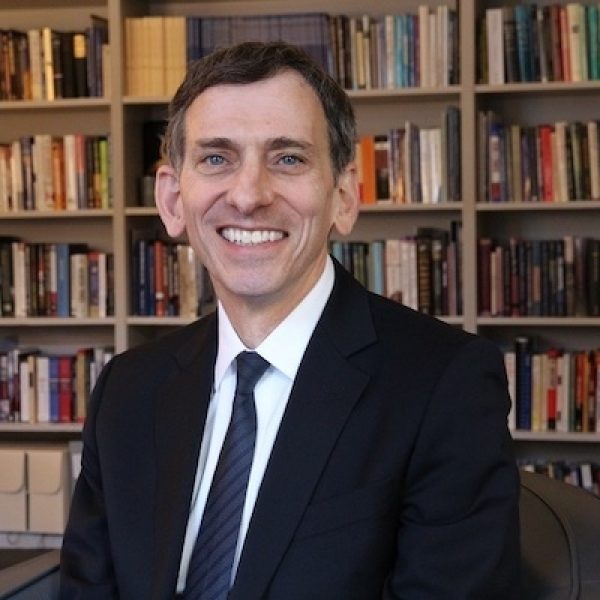
Joel H. Rosenthal
President, Carnegie Council
"The Fox knows many things, but the hedgehog knows one big thing." So begins Isaiah Berlin's essay, "The Hedgehog and Fox."
One year after September 11, 2001, in the midst of a still evolving "war on terrorism," it is important to ask: Are we all hedgehogs now? Do we see the world as it relates to this on big idea, the fight against global terror? The possibility of more terrorist attacks looms so large that it inevitably dominates our thoughts - particularly when terrorists themselves are threatening to use nuclear, chemical, or biological weapons on civilian targets.
The Carnegie Council confronts this "hedgehog" question in a very real way. Do we devote our attention to investigating the ethics of fighting a war against terrorism (the topic of our newsletter's first cover story one year ago), or should we see our role as providing a space for a fuller range of moral concerns confronting the world? Here are a few issues that could prove at least as threatening to mankind's survival and well-being as terrorism:
- GLOBAL AIDS CRISIS - At a Council meeting just after 9/11, UN official Louis Fréchette made the case for spending $7 to $10 billion per year on a global AIDS prevention campaign. AIDS advocacy groups were disappointed when President Bush recently pledged to spend $500 million to help fight the spread of AIDS in Africa. They argue that this relatively small investment will not go very far in combating the spread of a disease that has already taken 26 million lives worldwide and is poised to kill millions more.
- HUMAN TRAFFICKING - In May of this year, the International Labor Organization released a report saying that forced labor, slavery, and criminal trafficking in human beings - especially women and children - are on the rise worldwide, taking new and insidious forms. Though the issue has received some media attention, it is not usually headline news.
- ENVIRONMENT AND DEVELOPMENT - Nearly three years ago, the earth's population officially reached the six billion mark. Although we know the limits of Thomas Malthus's theory about the carrying capacity of the earth, questions of population, environment, and sustainability remain critical.
- MILITARIZATION OF SPACE - As everyone knows, the United States recently withdrew from its 30-year-old Antiballistic Treaty with Russia. But will the U.S. pursuit of missile defense assure safety and stability, or will it lead to a new arms race in the previously demilitarized zone of outer space?
One unintended danger of our hedgehog-like focus on the war against terrorism is that is squeezes the public space available to air other issues, increasing the risk of being blindsided by events that we might otherwise have taken steps to prevent. Reflecting this, the Carnegie Council will dedicate this program year to a broad-based agenda, engaging both the foxes and the hedgehogs.